


Our Services
Tree Growth Regulators (TGR)
Tree growth regulators (TGRs) are EPA-registered plant growth regulators applied to the soil near a tree's trunk, much like fertilizer, except they limit growth instead of feeding it. A TGR blocks gibberellin, the hormone that drives cell elongation, so new growth comes in shorter each season, keeping branches out of the power line clearance zone longer between trims.
Utilities use TGRs most on fast-growing species, the ones that otherwise need frequent trimming or removal to stay clear of the line. It lowers maintenance costs and can save a tree that would otherwise be marked incompatible with the right-of-way.
What sets our program apart is who makes the treatment call. Many vendors leave candidate selection to herbicide applicators working off a list; we use arborists who learn your pruning specs, program goals, and protocols first, so we only treat trees that actually move the needle, and we'll honestly flag a tree already on someone else's list that isn't a good candidate. The result fits into how your program already runs, condition-based or cycle-based, instead of fighting your existing specs.
Consulting Utility Forester (CUF)
A Consulting Utility Forester (CUF) is the most important role in a utility vegetation management contract, auditing vendor work, prescribing the right IVM treatment for the right-of-way, and often serving as the person a homeowner actually talks to about a tree in their yard. The right CUF saves a program real money; an under-qualified one costs far more than their salary.
Depending on what a program needs, our CUFs step in as embedded UVM staff, take on a defined project like a transmission vegetation management plan, or serve as a second set of expert eyes on an existing team. In every case, that means someone who audits contractor work honestly, prescribes what the right-of-way actually needs rather than what's easiest to sell, and uses the GIS, LiDAR, and work-management tools a program has already invested in.

Program Assessment and Budget Justification
Whether you're starting a new vegetation management program, inheriting one, or refreshing what you already have, we can help. We assess your system through extensive field sampling to determine the optimal trim cycle, then model what it costs to run that cycle every year, including any additional tools you want built in: tree removals, tree growth regulators, herbicides, or a combined IVM approach.
From there, we help you build a defensible budget and support you through the internal approval process, up to presenting it to your management directly, if you'd rather we do that part.

Auditing - IVM, Contractors, & Safety
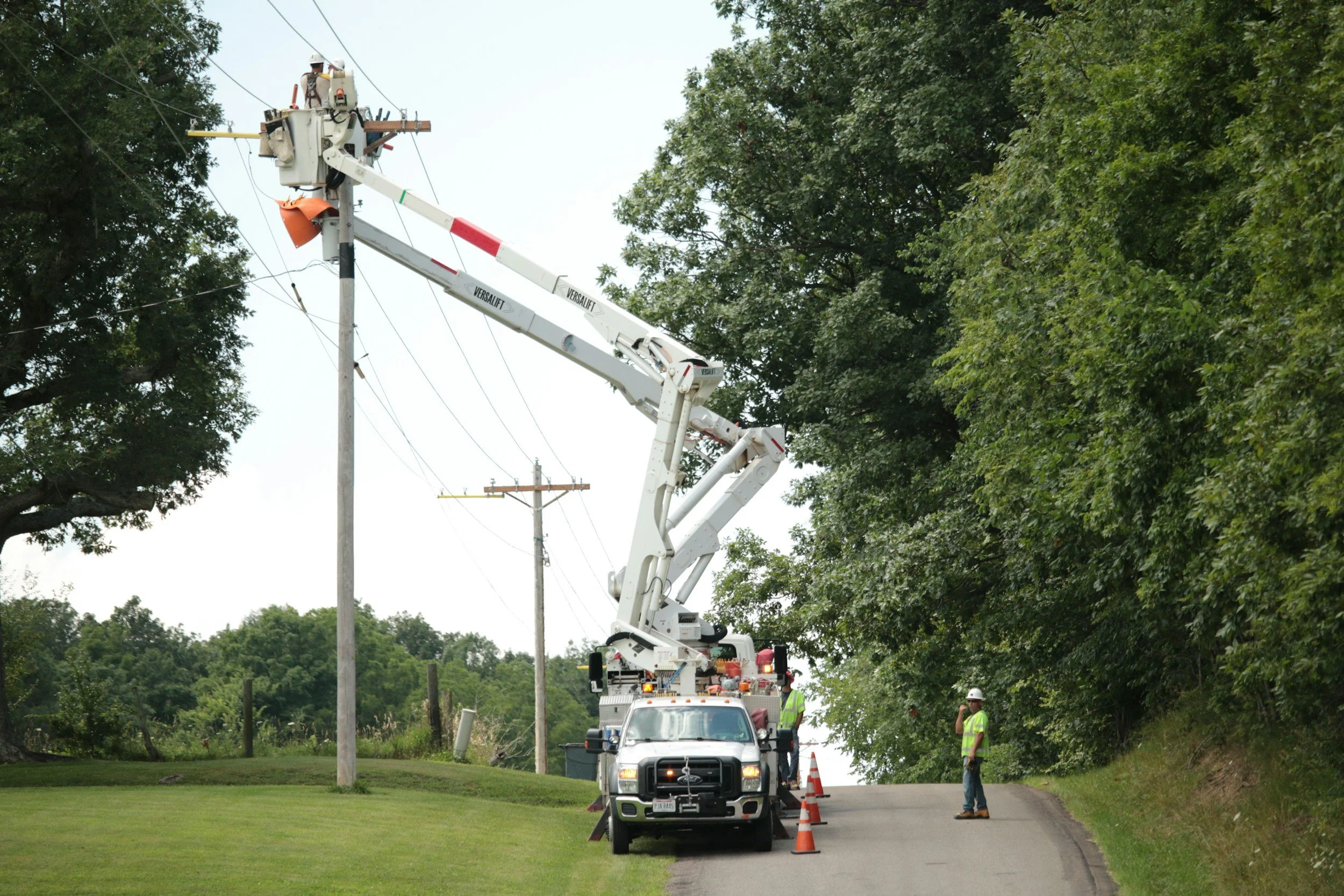
Auditing is the most overlooked and underutilized part of a vegetation management program. Most audits only ask whether the tree got pruned or the herbicide got sprayed, they verify that work happened, not whether it's actually paying off. They don't look at future cost escalation, or whether your TGR and herbicide programs are working the way they should. We look deeper, so your program benefits for years instead of just passing this year's checklist.
We audit contractors on more than whether they showed up: work quality, adherence to the contracted scope, safety performance in the field, and whether the job is on track against the timeline you agreed to. On the safety side, we go further still, reviewing formal compliance with OSHA and ANSI Z133 standards, work practices around energized lines, and whether training and documentation records hold up against what's actually happening in the field.
Wildfire Defensible Space
Defensible Space Around Poles (DSAP) is a growing fire-safety requirement for utilities in fire-threat areas, keeping vegetation cleared within a defined radius around poles carrying electrical equipment, and the standard keeps tightening as regulators pay closer attention.
We handle both sides of it: the field work of clearing and treating vegetation around poles, and the GIS documentation and tracking that shows exactly which poles have been treated, when, and to what standard, so if a regulator or your own management asks whether the program is actually compliant, you have the record to prove it, not just an assumption.

FAQs
-
Paclobutrazol blocks three steps in the pathway a tree uses to produce gibberellin, the hormone responsible for cell elongation. With less gibberellin, new shoots still form, they're just shorter, so the tree grows more slowly. The same shift redirects the tree's chemistry toward more abscisic acid, linked to better drought tolerance, and research out of the Morton Arboretum found it also slows the growth of several fungal pathogens in lab conditions. (Source: Purdue Extension, FNR-252-W)
-
DescriPaclobutrazol-based products (abbreviated as PBZ) go into the soil, either injected 2 to 6 inches deep near the trunk or poured into a shallow trench around the root flare. Dose is calculated from the tree's trunk diameter and species, not a flat rate, and treatment typically holds for up to three years before the tree needs to be treated again. (Source: U.S. EPA Tide Paclo 2SC, Cambistat 2SC, and Shortstop 2SC product labels.)ption text goes here
-
It depends on the tree species. On average, you can expect a reduction of 40-70% growth. Purdue University has cited an average of 40-60% reduction in growth (Purdue Extension FNR-252-W).
-
No. TGR is integrated into an existing pruning schedule, not instead of it. It extends how long a clearance cut holds, it doesn't substitute for the cut itself.
-
No. It slows the hormone pathway responsible for how fast new cells elongate, it doesn't stop growth or damage tissue. Both the label and the Purdue Extension review describe fuller-looking foliage as a secondary effect, not a downside.